---
title: HPLC Application Note Blog | Food and Beverage
description: Food and Beverage | View the latest in our Hamilton HPLC Application notes.
---
[](https://www.hamiltoncompany.com/laboratory-products/applications)

## HPLC Application Notes
# View the Latest Application Notes
[ ](https://blog.hamiltoncompany.com/appnotes/the-heat-is-on-the-isolation-of-capsaicin-for-therapeutic-treatments)
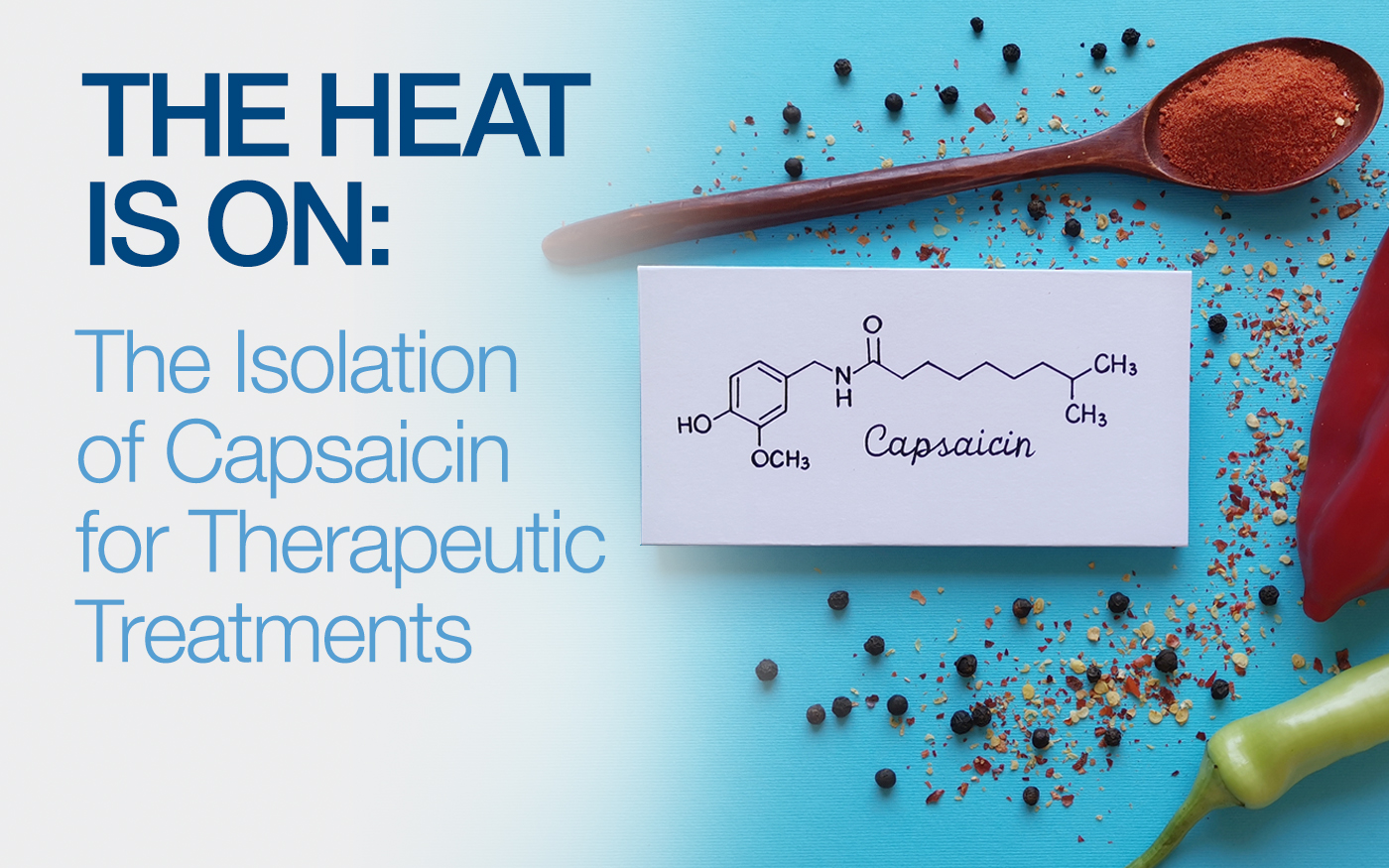
## [The Heat is On: The Isolation of Capsaicin for Therapeutic Treatments](https://blog.hamiltoncompany.com/appnotes/the-heat-is-on-the-isolation-of-capsaicin-for-therapeutic-treatments)
[fa icon="calendar'] February 11, 2022 / by [ Adam L. Moore, PhD ](https://blog.hamiltoncompany.com/appnotes/author/adam-l-moore-phd)
[fa icon="comment'] Comments: [0](https://blog.hamiltoncompany.com/appnotes/the-heat-is-on-the-isolation-of-capsaicin-for-therapeutic-treatments)
[fa icon="list'] Categories: [Food and Beverage](https://blog.hamiltoncompany.com/appnotes/tag/food-and-beverage)
The burning associated with ingesting or touching a chili pepper has been well documented as originating from the organic molecule, capsaicin. Capsaicin is widely accepted as the pepper’s natural defense system, but has also been exploited by the medical community.1Capsaicin research has indicated that it and its analogs contribute to reduced cholesterol, blood lipids, blood sugar, and has anti, -oxidative, -inflammatory, -obesity, and analgesic properties.2
[Read More [fa icon="long-arrow-right"]](https://blog.hamiltoncompany.com/appnotes/the-heat-is-on-the-isolation-of-capsaicin-for-therapeutic-treatments)
[ ](https://blog.hamiltoncompany.com/appnotes/poisoned-by-plastic-the-analysis-of-bpa-and-its-derivatives-in-water-bottles)
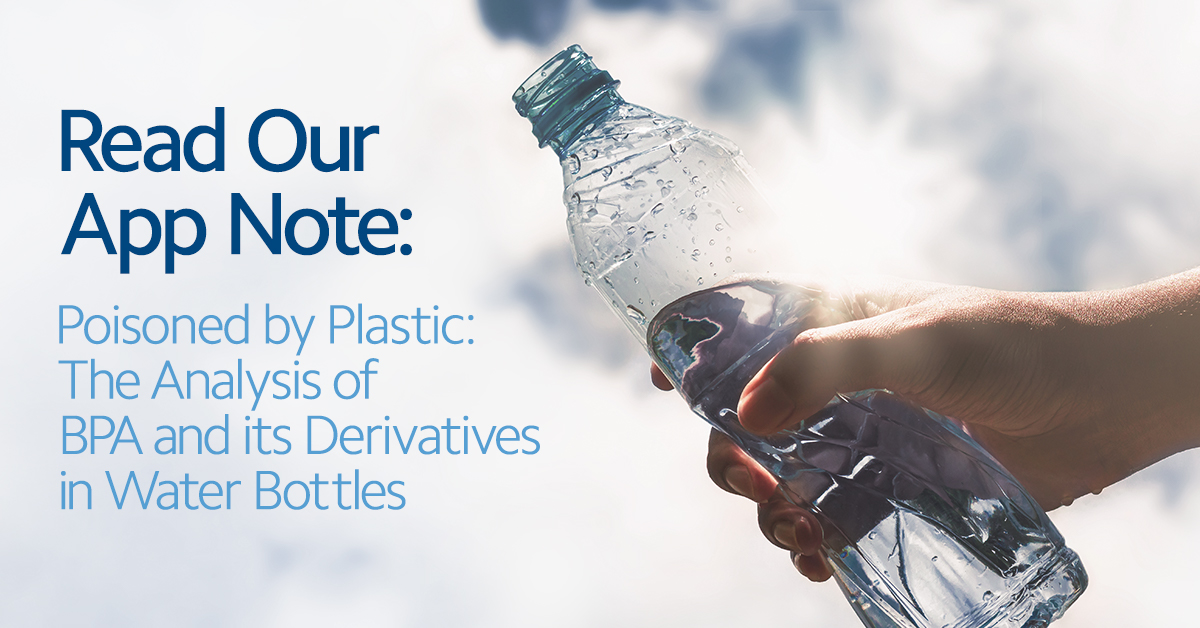
## [Poisoned by Plastic: The Analysis of BPA and its Derivatives in Water Bottles](https://blog.hamiltoncompany.com/appnotes/poisoned-by-plastic-the-analysis-of-bpa-and-its-derivatives-in-water-bottles)
[fa icon="calendar'] June 3, 2021 / by [ Adam L. Moore, PhD ](https://blog.hamiltoncompany.com/appnotes/author/adam-l-moore-phd)
[fa icon="comment'] Comments: [0](https://blog.hamiltoncompany.com/appnotes/poisoned-by-plastic-the-analysis-of-bpa-and-its-derivatives-in-water-bottles)
[fa icon="list'] Categories: [Food and Beverage](https://blog.hamiltoncompany.com/appnotes/tag/food-and-beverage)
Identification of polymeric hardening agents has led to unforeseen effects on humanity. Plastic containers have minimal initial costs and can conform to any shape desired compared with other types of modalities. To help ensure the container can hold its shape as well as aid in corrosion protection from acid components, amphiphilic compounds are added. However, since chemicals are added to the polymer to tune the hardness, pliability, longevity, and any other plasticity metric, there is a possibility of leaching under the right conditions. These conditions include increased solvent temperature, lipophilic and amphiphilic samples, and extended exposure to ultraviolet radiation.
[Read More [fa icon="long-arrow-right"]](https://blog.hamiltoncompany.com/appnotes/poisoned-by-plastic-the-analysis-of-bpa-and-its-derivatives-in-water-bottles)
[ ](https://blog.hamiltoncompany.com/appnotes/fast-hplc-analysis-of-dyes-in-foods-and-beverages-prp-c18)
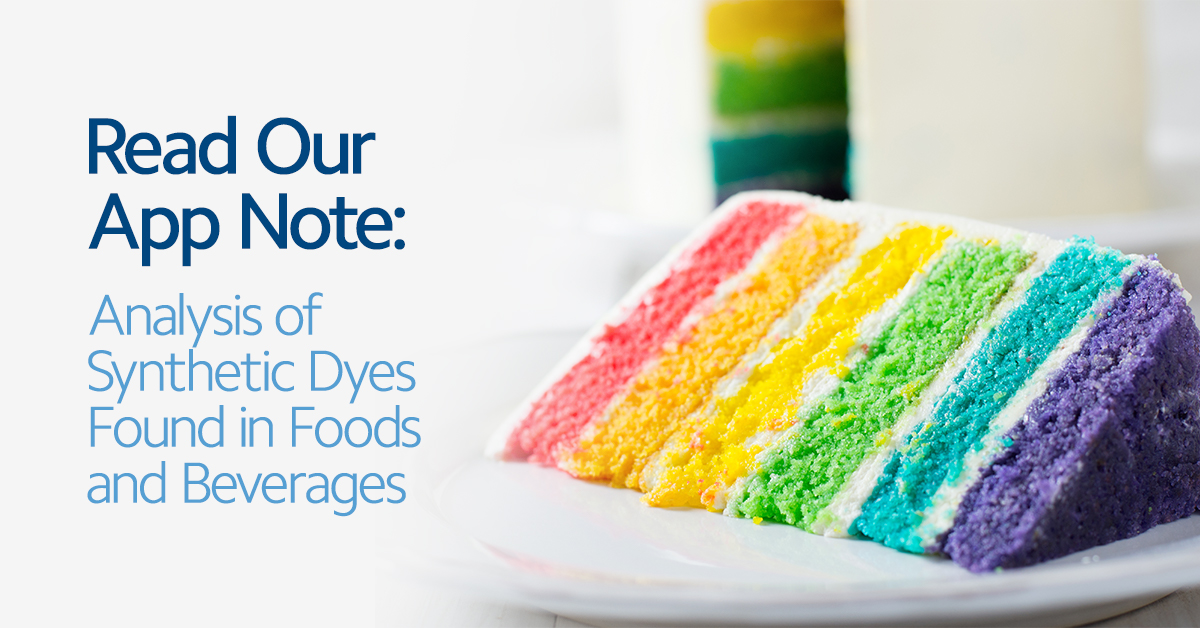
## [Fast HPLC Analysis of Dyes in Foods and Beverages (PRP-C18)](https://blog.hamiltoncompany.com/appnotes/fast-hplc-analysis-of-dyes-in-foods-and-beverages-prp-c18)
[fa icon="calendar'] November 25, 2020 / by [ Adam L. Moore, PhD ](https://blog.hamiltoncompany.com/appnotes/author/adam-l-moore-phd)
[fa icon="comment'] Comments: [0](https://blog.hamiltoncompany.com/appnotes/fast-hplc-analysis-of-dyes-in-foods-and-beverages-prp-c18)
[fa icon="list'] Categories: [Food and Beverage](https://blog.hamiltoncompany.com/appnotes/tag/food-and-beverage)
Dyes have been used over the centuries to give food more of an appeal to those eating it. Old foods were sometimes dyed to provide a more palatable appearance. Today food and beverages are generally dyed for the same reasons, to make the product more appealing, satisfying, and occasionally to hide off-flavors arising from the manufacturing process.
[Read More [fa icon="long-arrow-right"]](https://blog.hamiltoncompany.com/appnotes/fast-hplc-analysis-of-dyes-in-foods-and-beverages-prp-c18)
[ ](https://blog.hamiltoncompany.com/appnotes/bio-fermented-alcohol-detection-using-isocratic-cation-exchange-hplc-hc-75-h)
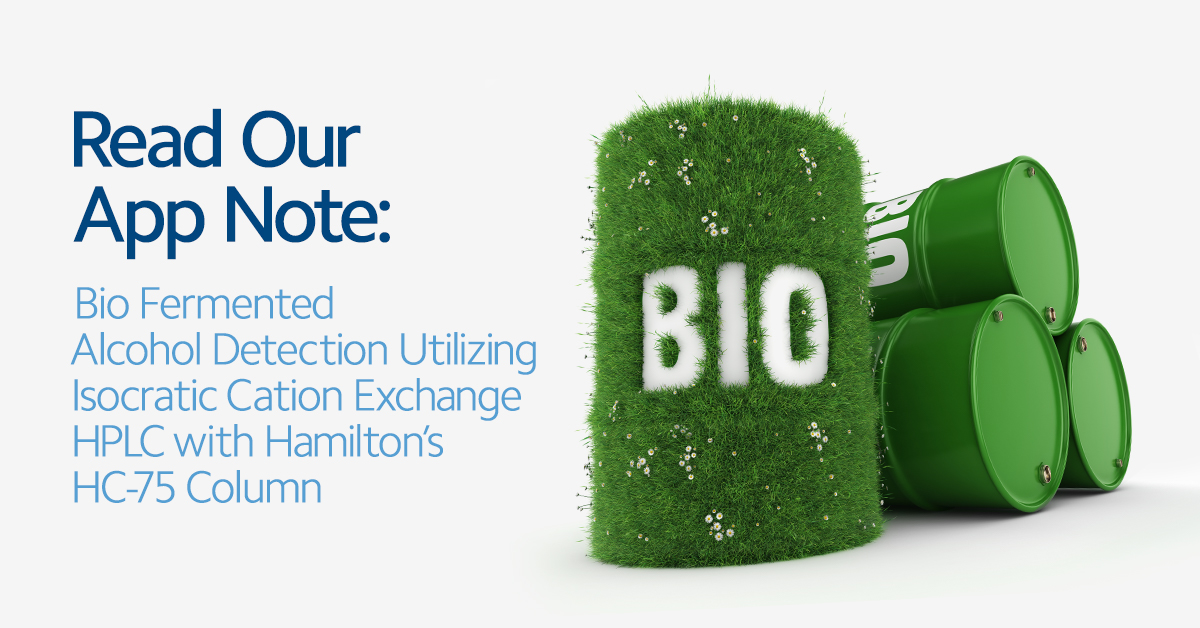
## [Bio Fermented Alcohol Detection Using Isocratic Cation Exchange HPLC (HC-75 H+)](https://blog.hamiltoncompany.com/appnotes/bio-fermented-alcohol-detection-using-isocratic-cation-exchange-hplc-hc-75-h)
[fa icon="calendar'] November 25, 2020 / by [ Adam L. Moore, PhD ](https://blog.hamiltoncompany.com/appnotes/author/adam-l-moore-phd)
[fa icon="comment'] Comments: [0](https://blog.hamiltoncompany.com/appnotes/bio-fermented-alcohol-detection-using-isocratic-cation-exchange-hplc-hc-75-h)
[fa icon="list'] Categories: [Food and Beverage](https://blog.hamiltoncompany.com/appnotes/tag/food-and-beverage)
Concern over detrimental greenhouse gases produced from the combustion of fossil fuels has been growing for the past few decades. Identification of new and more diverse methods of energy use has been investigated around the world. One such avenue is combustible alcohols produced from biomasses like sugar beet or sugar cane. To reduce dependence on fossil fuels, a concerted effort has been made to develop processes where biomass can be fermented biologically by bacteria or yeast to produce combustible alcohols. Combustible alcohols are desired over other technologies due to the convenience of switching from petrol based fuels. Ethanol is already added to most gasolines to increase octane efficiency. With anywhere from 5–25% ethanol being added to petrol products in most of the world and up to 100% ethanol fuel in Brazil.1 Additionally, the combustion of these alcohols tend to be more efficient and lead to less carbon monoxide side products.2
[Read More [fa icon="long-arrow-right"]](https://blog.hamiltoncompany.com/appnotes/bio-fermented-alcohol-detection-using-isocratic-cation-exchange-hplc-hc-75-h)
[View All Posts](https://blog.hamiltoncompany.com/appnotes/all)
Leave a Comment:
Submit Comment
### Comments:
### Posts by Industry
- [Environmental (4)](https://blog.hamiltoncompany.com/appnotes/tag/environmental)
- [Food and Beverage (4)](https://blog.hamiltoncompany.com/appnotes/tag/food-and-beverage)
- [Pharmaceutical (3)](https://blog.hamiltoncompany.com/appnotes/tag/pharmaceutical)
- [Analytical (1)](https://blog.hamiltoncompany.com/appnotes/tag/analytical)
---
### Recent Posts
---
---
### Archives
- [November 2020 (9)](https://blog.hamiltoncompany.com/appnotes/archive/2020/11)
- [June 2021 (1)](https://blog.hamiltoncompany.com/appnotes/archive/2021/06)
- [October 2021 (1)](https://blog.hamiltoncompany.com/appnotes/archive/2021/10)
- [February 2022 (1)](https://blog.hamiltoncompany.com/appnotes/archive/2022/02)
#### About Blog
The Hamilton Application Note Blog is your central hub for the latest knowledge on HPLC applications. Our application notes are all "downloadable" for your convenience.
#### View Posts
[[fa icon="linkedin-square"]](https://www.linkedin.com/showcase/hamilton-process-analytics/) [[fa icon="youtube-square"]](https://www.youtube.com/user/HamiltonBonaduzAG)
#### Reno Contact Info
[[fa icon="phone"] 1-775-858-3000](tel:7758583000)
[[fa icon="envelope"] sensors@hamiltoncompany.com](mailto:sensors@hamiltoncompany.com)
[fa icon="home"] Via Crusch 8, Bonaduz Graubünden 7402
#### Europe Contact Info
[[fa icon="phone"] 1-775-858-3000](tel:7758583000)
[[fa icon="envelope"] sensors@hamiltoncompany.com](mailto:sensors@hamiltoncompany.com)
[fa icon="home"] Via Crusch 8, Bonaduz Graubünden 7402
©2026 Hamilton Company. All rights reserved.
[[fa icon="chevron-up"]](https://blog.hamiltoncompany.com/appnotes/tag/food-and-beverage#)